

Physics Mechanics Study Notes
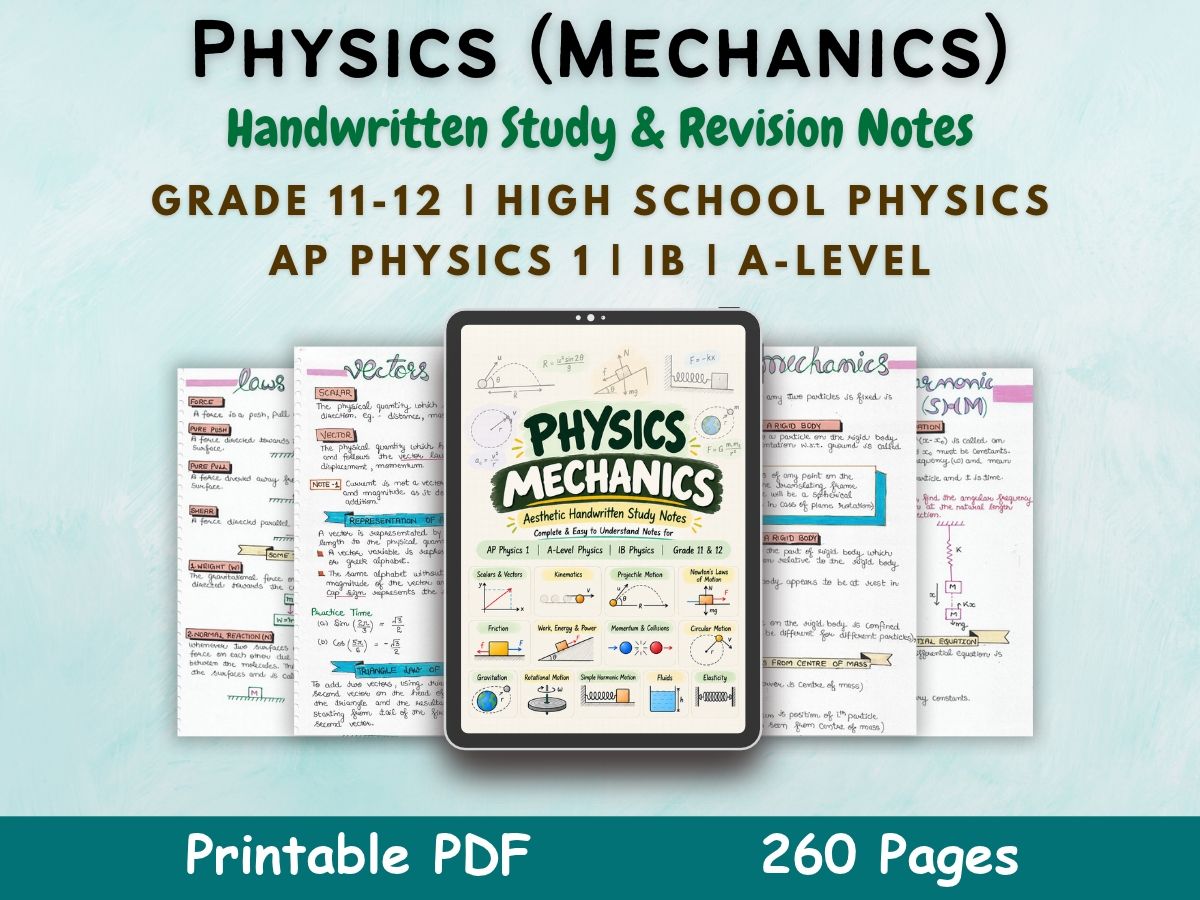
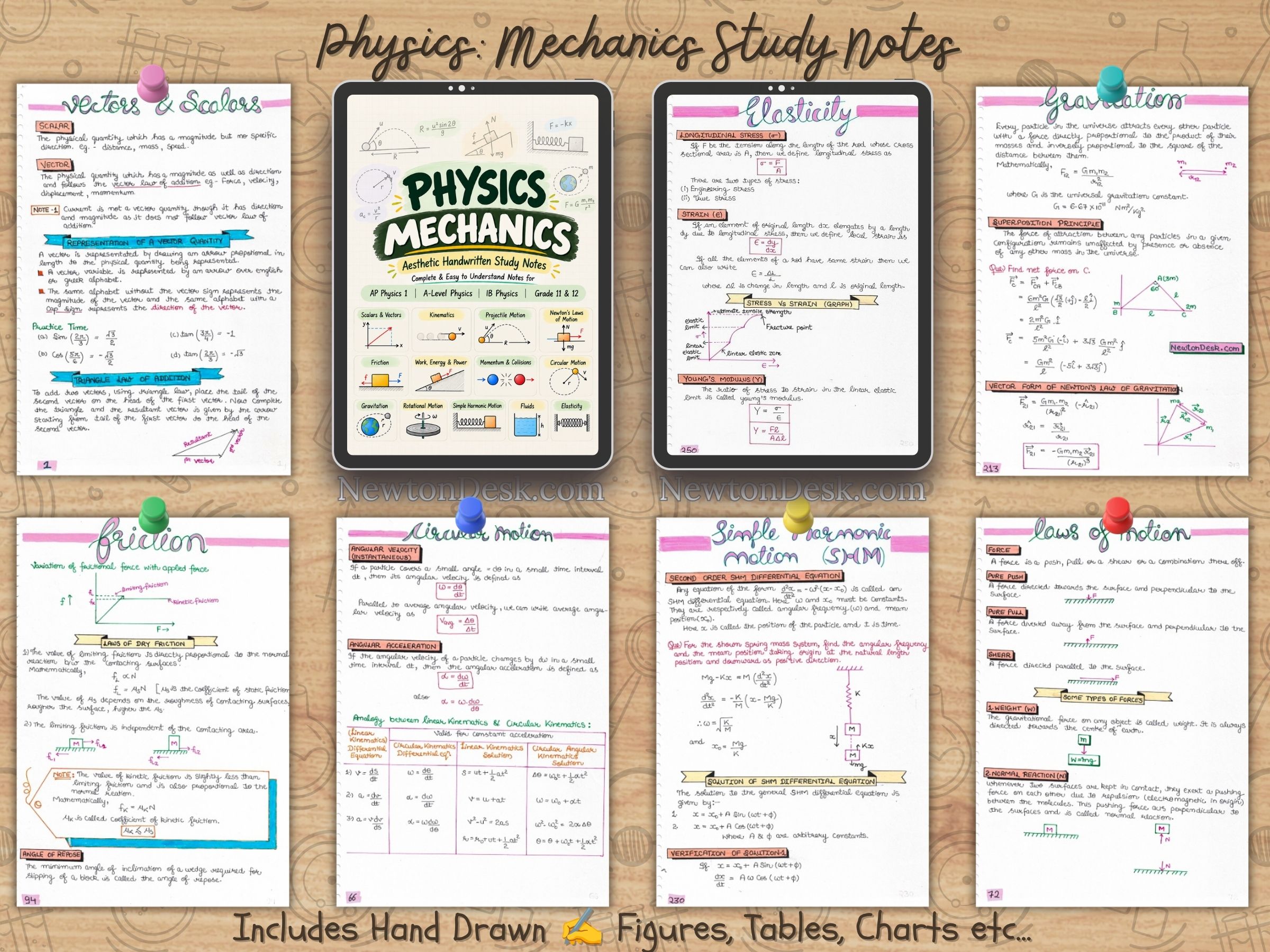
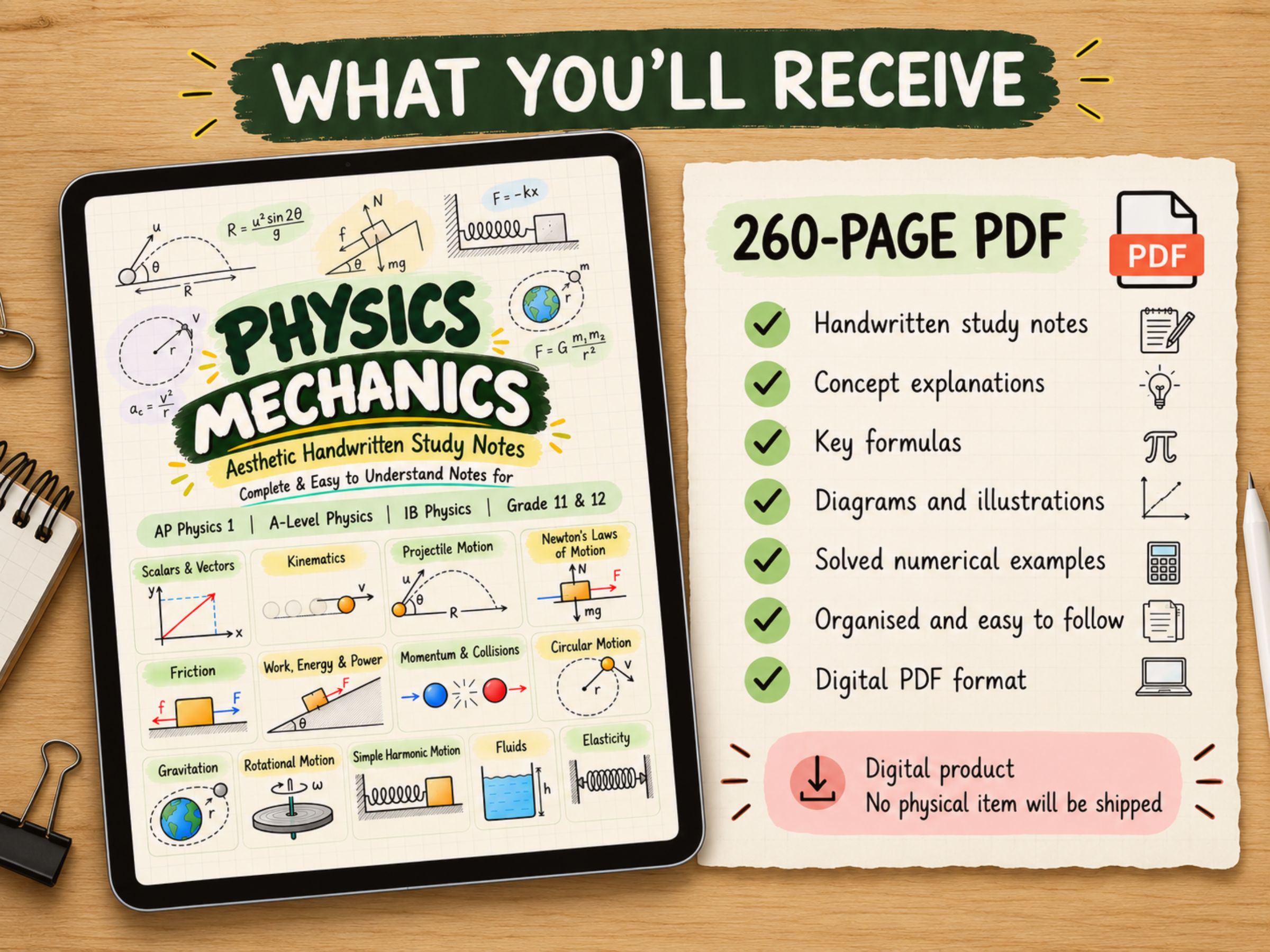
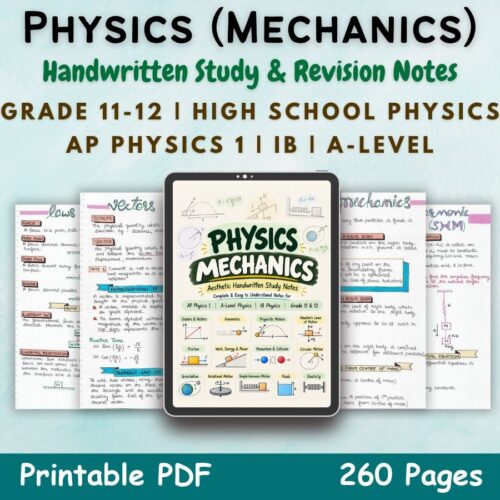
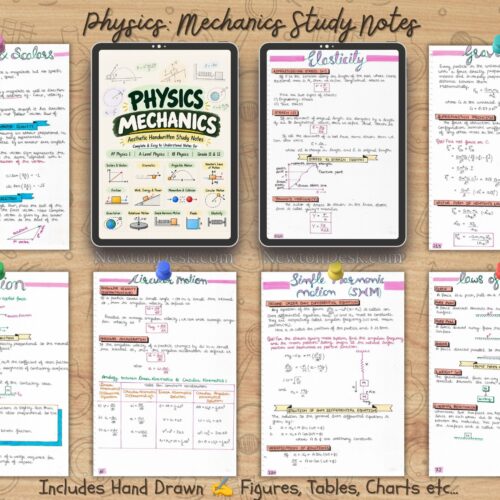
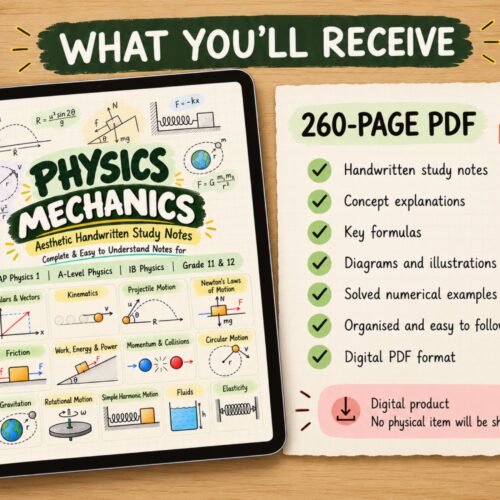
Studying mechanics becomes easier when you can work through the main concepts in a clear, organised way. These Physics Mechanics Study Notes bring together 14 essential areas of classical mechanics, from describing motion to understanding forces, energy, momentum and rotational motion.
Whether you are revising for a school physics assessment, reviewing a difficult topic or building a stronger foundation for further study, this resource gives you one place to review the mechanics topics included in the syllabus.
What’s Included in These Physics Mechanics Notes?
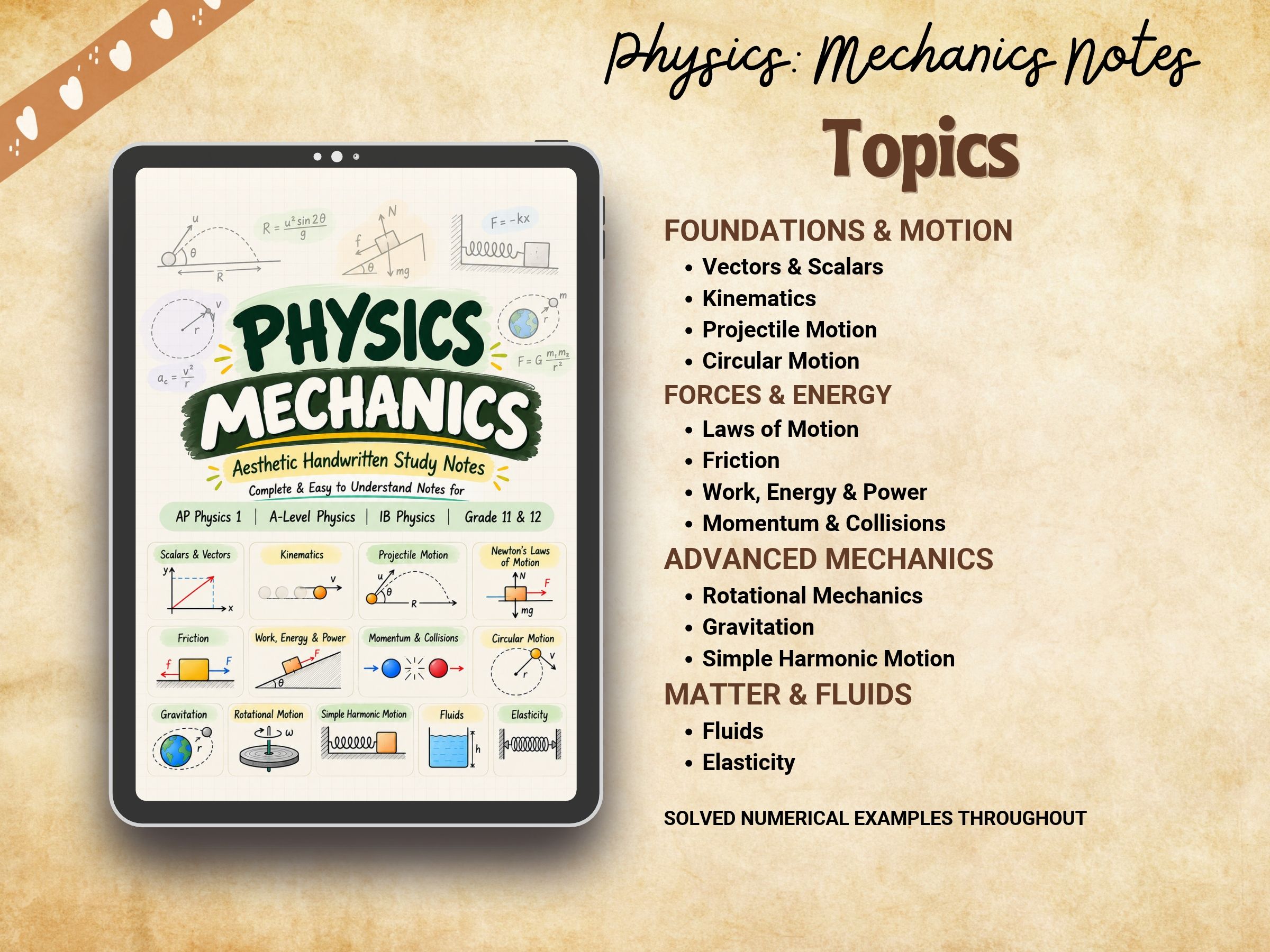
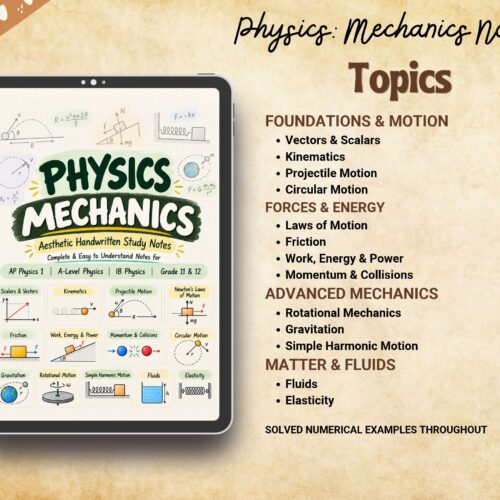
These physics study notes cover the following 14 topics:
➔ Vectors & Scalars: Understand the difference between scalar and vector quantities.
➔ Kinematics: Review displacement, velocity, acceleration and the description of motion.
➔ Projectile Motion: Study the horizontal and vertical components of projectile motion.
➔ Circular Motion: Review motion along a circular path and its associated physical quantities.
➔ Laws of Motion: Understand Newton’s laws and how forces affect motion.
➔ Friction: Explore the role of friction in the motion of objects.
➔ Work, Power & Energy: Review the relationship between work, energy transfer and power.
➔ Conservation of Momentum: Understand momentum and its conservation in suitable systems.
➔ Collisions: Study how momentum applies to interactions between objects.
➔ Rotational Mechanics: Explore rotational motion and related mechanical principles.
➔ Fluids: Review the mechanics of fluids.
➔ Gravitation: Understand gravitational interactions and their effect on motion.
➔ Simple Harmonic Motion (SHM): Review oscillatory motion and its key principles.
➔ Elasticity: Study how materials respond to applied forces and deformation.
Who Are These Physics Study Notes For?
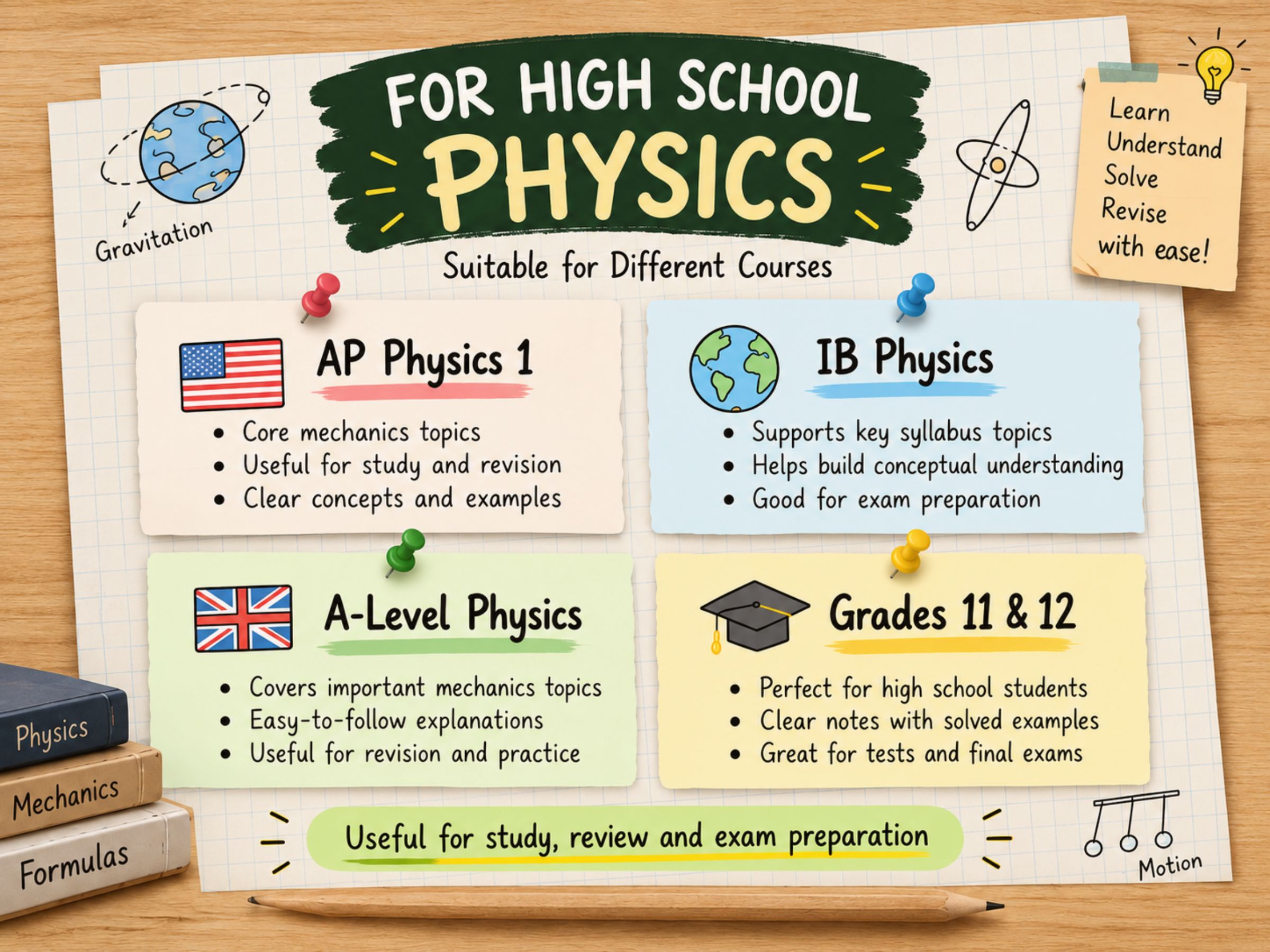
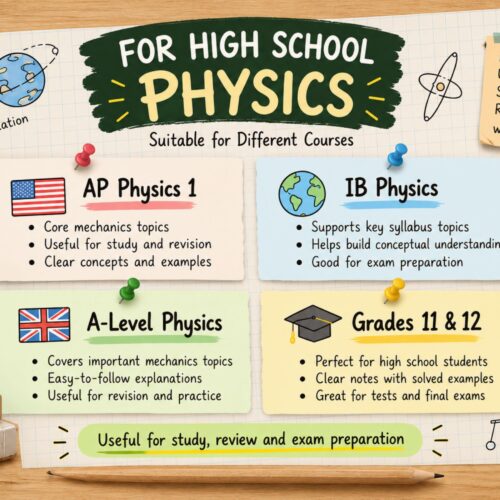
These mechanics revision notes are intended for high school and pre-university students who want to review classical mechanics. They may be useful for:
✔ US high school physics students studying mechanics concepts.
✔ Students preparing for AP Physics who need supplementary topic revision.
✔ UK students studying AS or A-Level Physics.
✔ Canadian students taking Grade 11 or Grade 12 Physics.
✔ Australian students studying senior secondary physics in Years 11 and 12.
✔ Students following other introductory physics courses that include classical mechanics.
Course content and assessment requirements differ between schools, exam boards and countries. Please compare the listed topics with your own syllabus before purchasing.
Which Exams and Courses May These Notes Support?
The topics overlap with parts of several recognised physics courses:
AP Physics 1: Mechanics-related topics include kinematics, forces, energy, momentum, rotational dynamics, oscillations and fluids. Check your course framework against the complete contents of this resource.
A-Level Physics: The listed material overlaps with mechanics and materials topics found in A-Level specifications. The exact coverage depends on the exam board and the depth of the notes.
IB Physics SL & HL: Selected mechanics concepts may support topic revision, but this product should not be treated as complete IB Physics coverage without a detailed syllabus comparison.
Canadian Grade 11–12 Physics: A supplementary resource for students whose provincial course includes the relevant mechanics topics.
Australian Year 11–12 Physics: Potentially useful for selected mechanics topics, subject to the applicable state or territory syllabus.
These notes are a supplementary study resource, not an official exam-board publication or a guarantee of complete syllabus coverage.
Why Study Mechanics as a Connected Subject?
Mechanics topics build on one another. Understanding vectors helps with motion and forces. Motion and Newton’s laws help explain circular and projectile motion. Work, energy and momentum provide different ways to analyse physical systems, while rotational mechanics and oscillations extend these ideas to more complex motion.
Reviewing these connections can help you understand not just individual formulas, but also when and how different physics principles apply.
Product Details
– Product: Physics Mechanics Study Notes
– Topics: 14
– Page count: 260
– Level: High school and pre-university, depending on syllabus fit
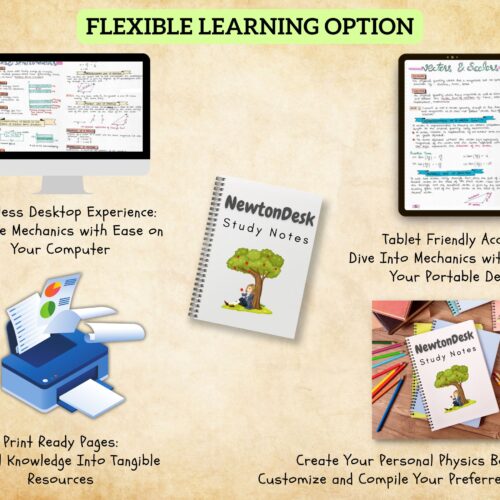
– Format: Printable Digital PDF
______________________________
Frequently Asked Questions (FAQs)
What topics are covered in these Physics Mechanics Study Notes?
The resource covers Vectors and Scalars, Kinematics, Projectile motion, Circular motion, Newton’s laws, Friction, Work, Power and Energy, Momentum conservation, Collisions, Rotational mechanics, Fluids, Gravitation, Simple harmonic motion (SHM) and Elasticity.
Are these notes suitable for AP Physics 1?
They may be useful for selected AP Physics 1 mechanics topics. However, students should compare the complete resource with the current College Board course framework before go with it for exam preparation.
Can A-Level Physics students use these notes?
Yes, as supplementary revision material for relevant mechanics topics. Students should check the content against their exam board’s specification because topic depth and requirements vary.
Are these notes suitable for Grade 11 and Grade 12 students?
They may be suitable for students in these grades when their course includes the listed mechanics topics. Grade placement and syllabus coverage differ between schools and regions.
Do these notes cover the complete physics syllabus?
No. This product focuses on the 14 listed mechanics topics. It should not be presented as a complete physics syllabus covering electricity, waves, thermal physics, atomic physics and every other area unless those topics are actually included, But you can get Complete Physics Notes from Here.
Are these notes enough to prepare for a physics exam?
They can help you review the topics included, but exam preparation may also require practice questions, past papers, practical work, data analysis and other material specified by your course.
How can I check whether these notes match my course?
Compare the 14 listed topics with your official course specification. If your exam board requires additional subtopics, practical skills or a greater depth of treatment, you can check out our other resources as well.
Who should consider buying these notes?
Students who want a consolidated resource for reviewing the listed mechanics topics and who have confirmed that the content suits their Level and course requirements.


